Autism support for children can involve different therapies, services and strategies.
Every autistic child has different strengths, needs and personal goals. Support should reflect these individual differences.
Families can work with qualified professionals to identify suitable therapies and practical support.
This approach can help children develop skills and participate in everyday activities.
Understanding Autism
Autism is a lifelong developmental difference that can affect communication, social interaction and sensory experiences.
Autistic children may also have different learning styles, interests and ways of interacting with others.
Autism exists across a broad spectrum. Therefore, each child may experience different strengths and support needs.
Support should focus on the individual rather than trying to change who they are.
Families can discuss their child’s needs with appropriate healthcare and developmental professionals.
What Support Can Help Autistic Children?
Several therapies and support approaches may assist autistic children.
The right combination depends on the child’s needs, strengths and individual goals.
According to Raising Children Network, support can include behavioural, developmental, family-based and medical approaches.
Some children may benefit from speech pathology, occupational therapy or psychological support.
Other children may benefit from structured behavioural approaches or communication-focused therapies.
Professionals can help families understand available options and choose appropriate support.
Communication Support
Communication support can help children express their needs, preferences and feelings.
Speech pathology can support language development and social communication skills.
Some children may use speech, signing, pictures or communication devices.
Functional Communication Training can also help children develop alternative ways to communicate.
Raising Children Network describes Functional Communication Training as an approach for replacing challenging behaviour with communication skills.
Communication goals should reflect each child’s abilities and everyday needs.
Occupational Therapy and Developmental Support
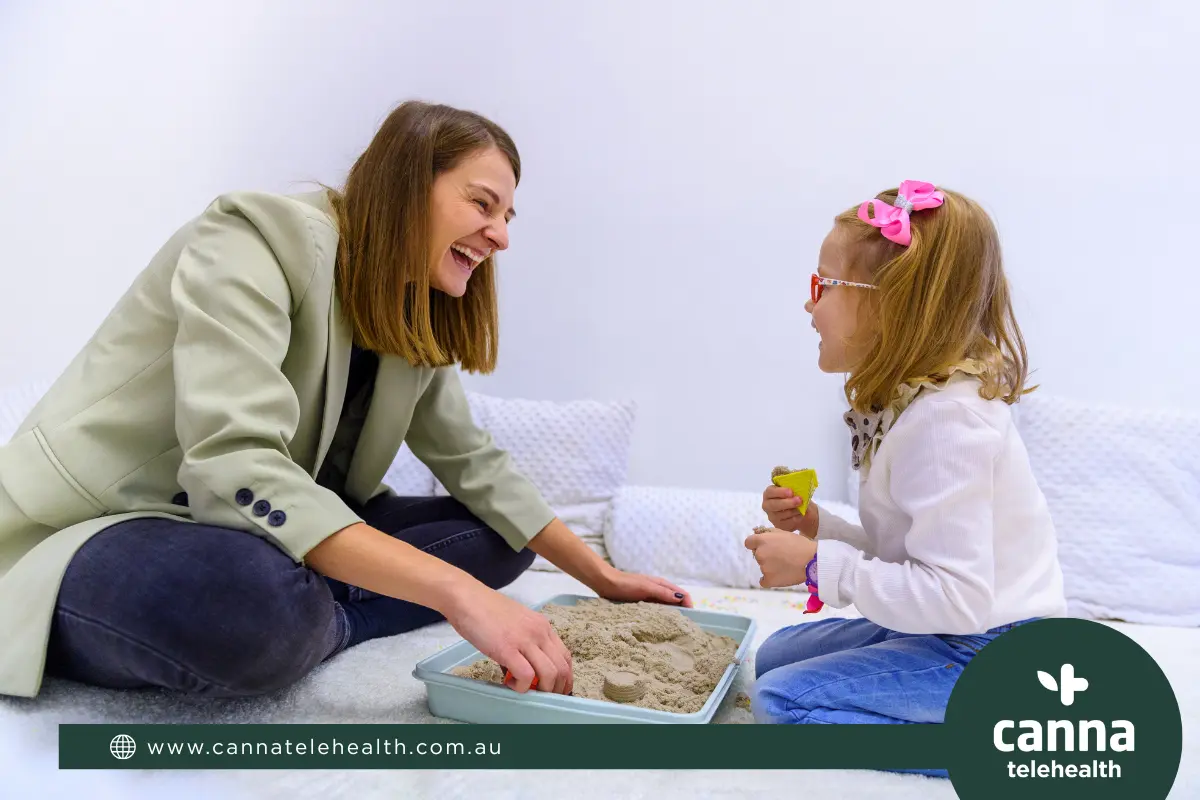
Occupational therapy can support children with everyday activities and participation.
Support may address fine motor skills, sensory processing and daily living activities.
Developmental therapies can also support communication, learning and social skills.
These approaches can help children practise skills in everyday environments.
Families should consider practitioners who understand autism and work with individual developmental needs.
Behavioural and Positive Support Approaches
Some behavioural approaches focus on developing useful skills and encouraging positive behaviours.
Positive Behaviour Support can help identify factors that contribute to challenging behaviour.
Professionals may then develop strategies that support communication, participation and wellbeing.
The goal should remain practical and meaningful for the child.
Families can discuss these approaches with appropriately qualified professionals before starting therapy.
Family Involvement Matters
Parents and carers can play an important role in their child’s support.
Regular involvement can help children practise skills during everyday activities.
Families can also share observations with their child’s support team.
This information can help professionals understand what works well at home and in other settings.
Raising Children Network recommends working collaboratively with disability professionals.
A positive partnership can help families make therapy more practical and consistent.
Choosing an Autism Therapy
Families may find many therapies and support options online.
However, not every approach has strong scientific evidence behind it.
Raising Children Network’s therapy guide reviews more than 60 therapies for autistic children.
Its ratings range from established approaches to therapies where evidence remains insufficient.
Families should consider the available evidence before starting a new therapy.
It is also important to consider potential risks, costs and time commitments.
A qualified professional can help families assess whether an approach suits their child’s needs.
Individualised Autism Support
There is no single approach that suits every autistic child.
Support should consider the child’s communication, development, environment and personal goals.
Some children may need support with communication or daily living skills.
Others may need help with anxiety, sleep, sensory needs or challenging behaviours.
A coordinated team can help families address different areas of development.
Regular reviews can also help families adjust support as their child’s needs change.
Exploring Complementary Therapies
Families may also encounter complementary therapies that claim to support autistic children.
Evidence varies considerably between different approaches.
Some therapies have limited research, while others have stronger evidence.
Families should avoid replacing established support with approaches that lack reliable evidence.
Raising Children Network notes that many alternative therapies have little or no evidence supporting their use.
Discussing complementary options with a qualified healthcare professional can help families make informed decisions.
Supporting Your Child’s Wellbeing
Autism support should consider more than specific behaviours or developmental skills.
Children also need opportunities to build confidence, relationships and independence.
Families can support wellbeing through predictable routines and appropriate communication strategies.
They can also create environments that respect sensory preferences and individual needs.
Positive relationships can help children feel understood and supported.
Professional guidance can help families identify practical strategies for everyday life.
When to Seek Professional Support
Families should seek professional guidance when they have concerns about their child’s development or wellbeing.
A healthcare professional can help identify appropriate assessments and support services.
Early support can provide opportunities to develop useful skills and improve participation.
Families can also seek guidance when existing strategies no longer meet their child’s needs.
Professional support should remain individualised and responsive to the child’s development.
A Personalised Approach to Autism Support
Autism support for children should focus on meaningful goals and individual strengths.
Evidence-informed therapies can support communication, development and participation.
Family involvement can also make therapy strategies easier to use at home.
Most importantly, support should respect each child’s individuality and wellbeing.
Families do not need to navigate these decisions alone.
Speaking with qualified professionals can help families understand their options and choose appropriate support.
Important: This article provides general information only and does not constitute medical advice. It is not intended to diagnose, treat, cure, or prevent any disease or condition. Always consult a registered healthcare professional for advice tailored to your individual circumstances.
05